
How to Search Civil Dockets
For a recent public civil docket, begin with the Blount Online Court Records System. The county says it covers filings from August 1, 2019. Some older entries show up too. Pick Civil, then choose Circuit Court, General Sessions, or Clerk and Master. You can search a full party name, case reference, four-digit year, or case number.
Expect a simple form. There is no field for the amount in controversy or attorney. Cause of action and date range are missing too. Party Name takes 100 characters; Case Number takes 50. For a formatted number, type only the numeric segment after the last hyphen. The Turnstile human check must finish before Find Now works.
- Choose the likely court office and Civil case type.
- Enter a full name or case reference.
- Add a year or final numeric case segment.
- Complete verification and sort the results.
- Confirm filings, settings, disposition, and custodian.
Blount Civil Search Has Limits
A broad name search can flood you with rows. So add the year and court office when you know them. Search terms combine by default, quotation marks trigger a phrase match, and the visible-results filter matches literal text only. One more tip. If a browser verification fails, that says nothing about the Blount County civil court docket itself.
| Control | Purpose | Key point |
|---|---|---|
| Party Name | Name or reference | Use complete names |
| Case Year | Narrow results | Four digits |
| Court Type | Select custodian | Keep one checked |
| Case Type | Select Civil | No claim-type filter |
The county's Circuit Civil source identifies its docket and service channels.
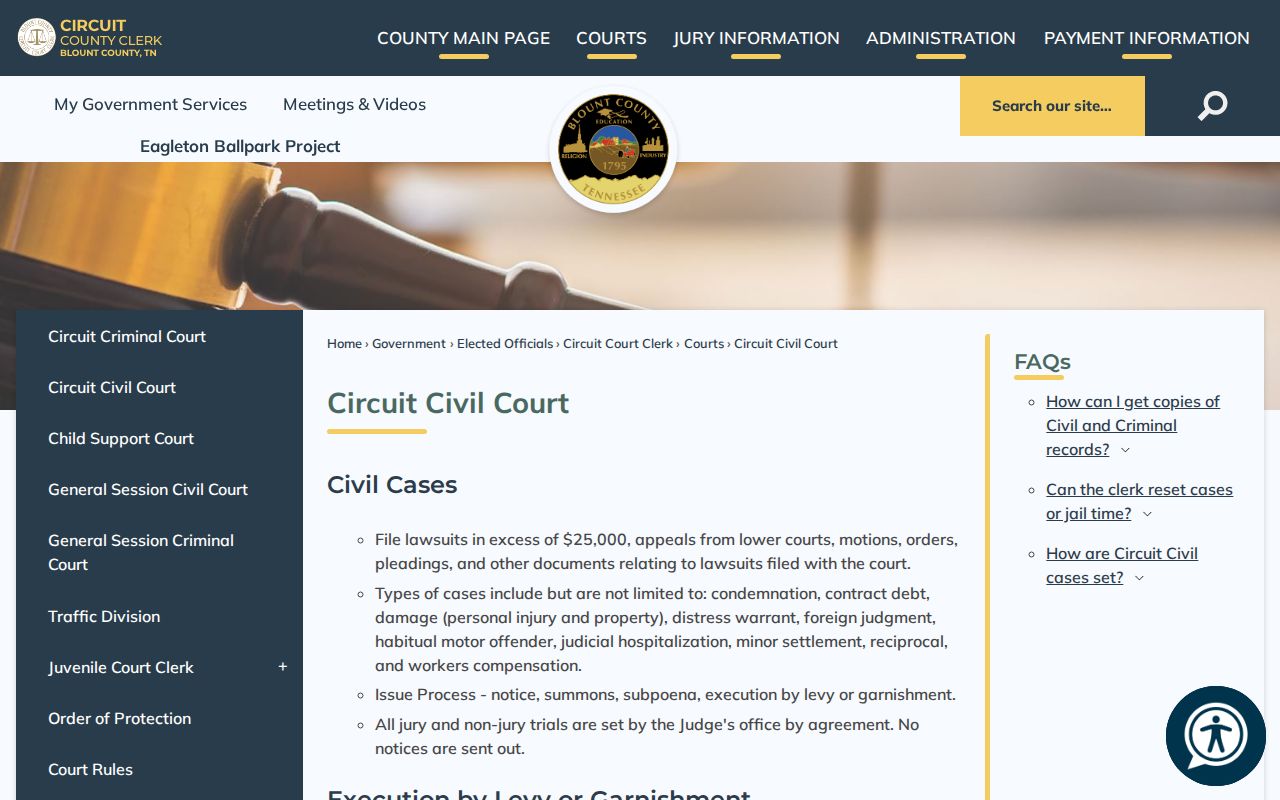
That division is one piece of the civil system, not the home of every civil file.
What a Civil Docket Shows
A Blount County civil docket entry starts with the court, number, filing date, case type, subtype, and caption. Party roles run plaintiff and defendant, or petitioner and respondent. The chronological register tracks each filing: complaint, summons, return of service, answer, motion, order, notice, setting, judgment, and later enforcement steps.
One official redacted Chancery docket shows the local pattern. It lists a number like 5CH1-2024-CH-11, case style, subtype, judge, date, time, lawyers, and hearing notes. Sealed and confidential matters stay off it by design.
| Header | Case number, court, date, type, and caption. |
|---|---|
| Parties | Plaintiff, defendant, petitioner, respondent, and counsel. |
| Register | Filings, service, motions, notices, and orders. |
| Settings | Judge, date, time, hearing type, and notes. |
| Outcome | Judgment, dismissal, nonsuit, transfer, or appeal. |
Blount Chancery Has Its Clerk
Chancery is not just another Circuit Civil filter. Steve S. Ogle is the Blount County Clerk & Master. He keeps equity, probate, estate, adoption, conservatorship, domestic, tax-suit, and related records. His office also posts redacted hearing dockets and docket-sounding material. Circuit Clerk Chris Cantrell holds the Circuit and General Sessions civil files instead. The official Clerk & Master's Office page describes that separate docket in full.
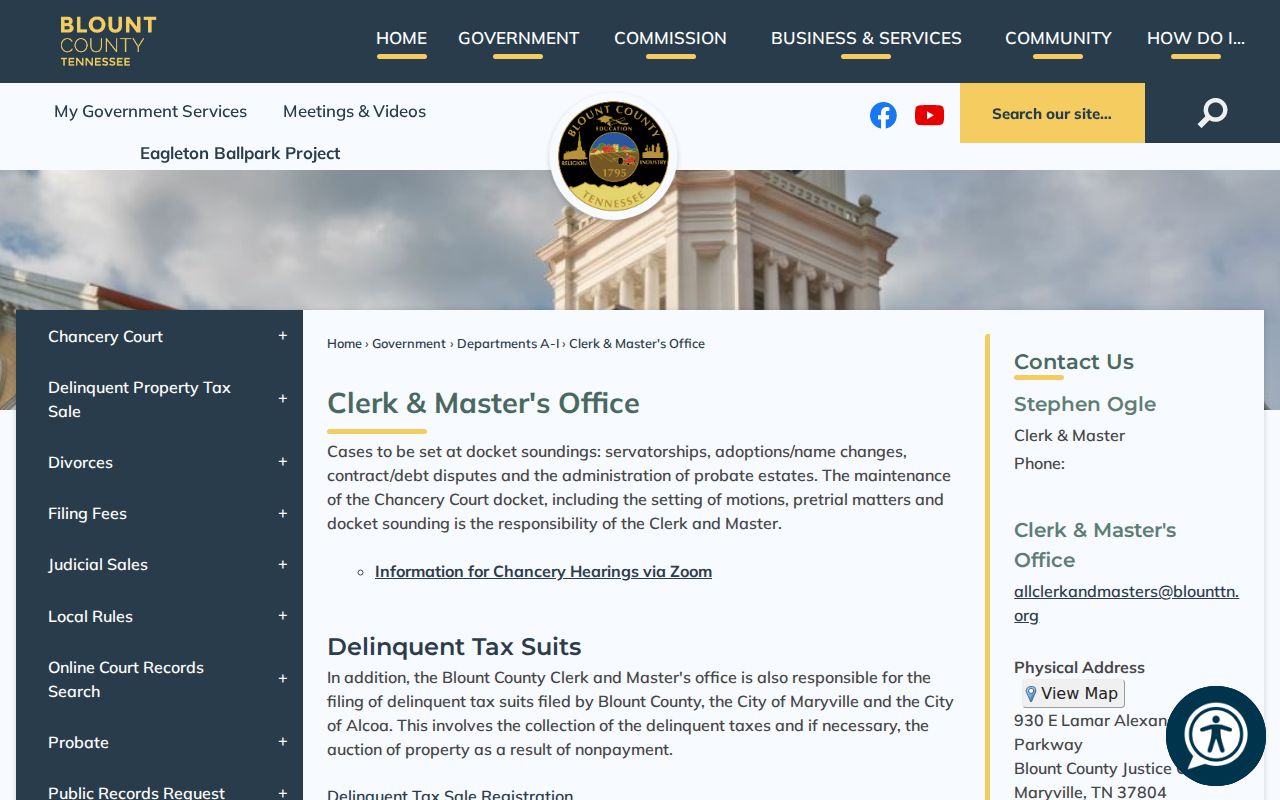
That official page makes clear why a probate or Chancery search should never stop at the Circuit Civil counter.
Circuit Civil
926 E Lamar Alexander Parkway, Maryville, TN 37804
865-273-5400; civil 865-273-5430
Clerk & Master
930 E Lamar Alexander Parkway, Maryville, TN 37804
865-273-5500
Types of Civil Cases on the Docket
The claim decides the court. Circuit Civil covers suits above $25,000, lower-court appeals, condemnation, contract and debt claims, personal injury or property damage, foreign judgments, minor settlements, and workers compensation matters. General Sessions Civil handles matters within its lower jurisdiction. Chancery takes equity along with its probate-related set.
- Contract, debt, tort, property, and condemnation claims
- Probate, estates, conservatorships, and adoption or name change
- Domestic, support, and other family-related proceedings
- Tax suits, foreign judgments, and post-judgment enforcement
- Lower-court appeals and cases transferred into Circuit Law
A jury demand in a Clerk & Master case can push it over to Circuit Law. So the filing desk and the trial docket can end up in different places.
Blount Docket Prefixes Route Files
Local rules mark C for criminal and L for civil or law docket context. When the Clerk & Master assigns a Circuit docket number, an E prefix applies. Chancery numbering runs by year. These markers point to the right office, but they never replace the full formatted number.
Searching, keep the source number just as written. Then follow the portal's rule: type only the numeric segment after the last hyphen in the Case Number box. Requesting a copy, give the complete number, caption, court, and date range. That keeps a Blount County civil docket request from landing with the wrong clerk.
Routing clue: The prefix points toward docket context; the named court and custodian confirm where the file is held.
Settings and Hearings on Civil Dockets
Circuit judges set civil jury and nonjury trials themselves, working from agreements between the parties. Nothing goes out by mail. The county says no notices are sent, so waiting for one is a mistake. Instead, confirm any trial setting with the judge's office, the secretary, the clerk, and the most recent civil docket entry for the case.
Chancery handles scheduling a bit differently. Its docket sounding is a calendar review held after notice, where the court checks status and readiness and may set a trial date. That session is not the trial itself. If a case gets reset or continued, the new hearing replaces the old date on the schedule, but the earlier entry stays in the chronology of the court docket. To see the wider schedule, put the case register next to the Blount County court calendar.
For remote appearances, the county's Chancery Zoom source spells out how hearings get set and joined online.
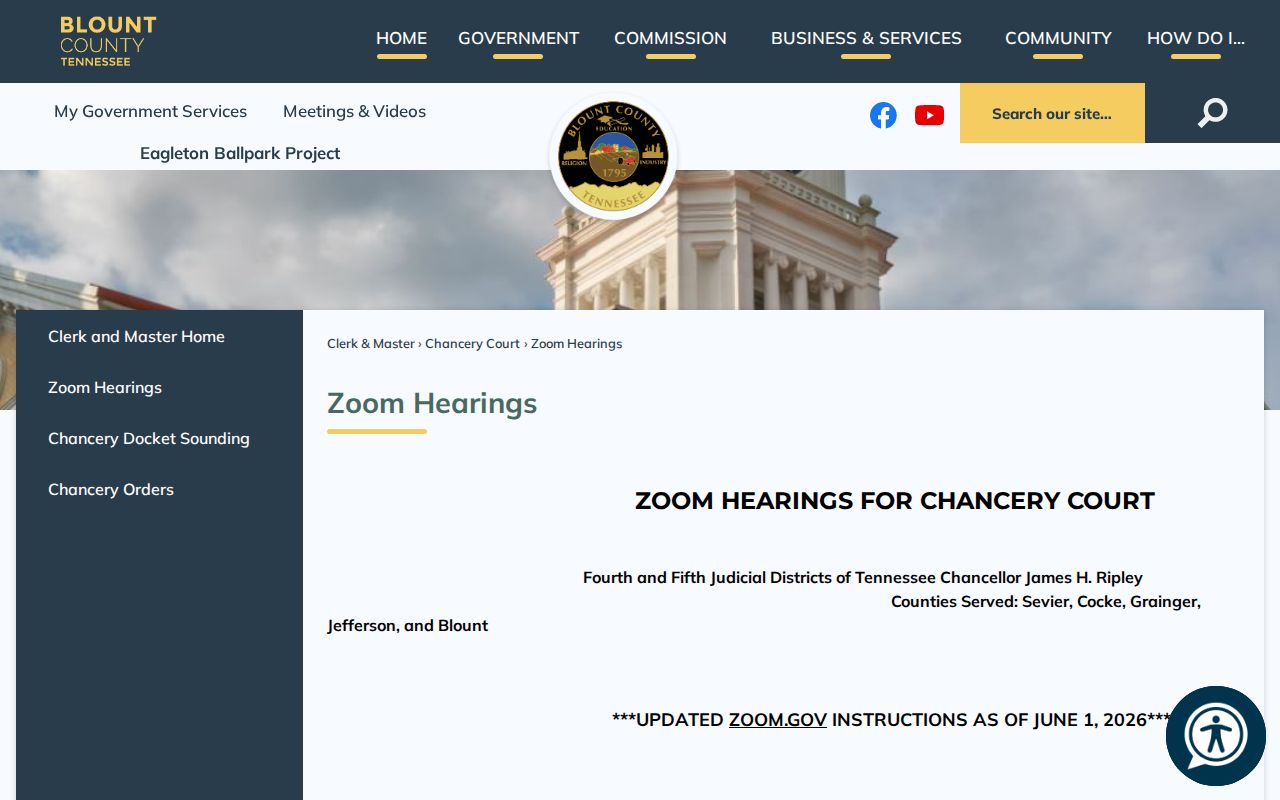
A remote hearing still turns on the assigned setting and current court instructions. No standing public meeting link replaces either.
Blount Civil Outcomes Need Context
Default, nonsuit, DWOP, settlement, and judgment are not the same animal. A default judgment can follow. It happens when a properly served party fails to respond. A nonsuit is a withdrawal. The plaintiff pulls the case under the applicable procedure. DWOP means dismissed for want of prosecution. And a settlement may end in an agreed order that hides the full terms.
- Notice of setting
- Notice of when and where a hearing occurs.
- Docket sounding
- A status and readiness calendar used in Chancery.
- Default judgment
- A judgment tied to failure to respond or appear as required.
- Disposition
- The event that resolves a claim or case.
After judgment, the register may show an abstract, execution, garnishment, levy, satisfaction, installment petition, appeal, or reopening. Those entries summarize activity. The signed judgment controls the legal effect.
Public Access to Civil Dockets
Tennessee keeps its court records open as a rule. The exceptions matter, though. Sealed files, protected identifiers, adoptions, and certain family, juvenile, guardianship, or conservatorship material may be withheld or redacted. The official Chancery sample leaves confidential cases out. A blank result on the portal can mean the file falls outside online coverage, is sealed or protected, is too old, or sits with a different clerk. Check with the clerk holding the record before assuming a case does not exist.
Access rule: Tennessee Supreme Court Rule 34 permits public inspection unless a law, sealing order, protective order, or recognized exception applies.
The portal is only a window, not the official signed file. Want to inspect a docket in person? The Circuit Clerk accepts inspection-only requests that are not in writing. Copies work differently. They use Form A. It requires proof of Tennessee citizenship plus a detailed description of the records. When a response cannot come promptly, Form B applies. It lays out any delay, denial, costs, or segmented production within seven business days.
Blount Civil Fees and Volume
The Clerk & Master fee schedule lists filing and copy charges effective January 1, 2026.
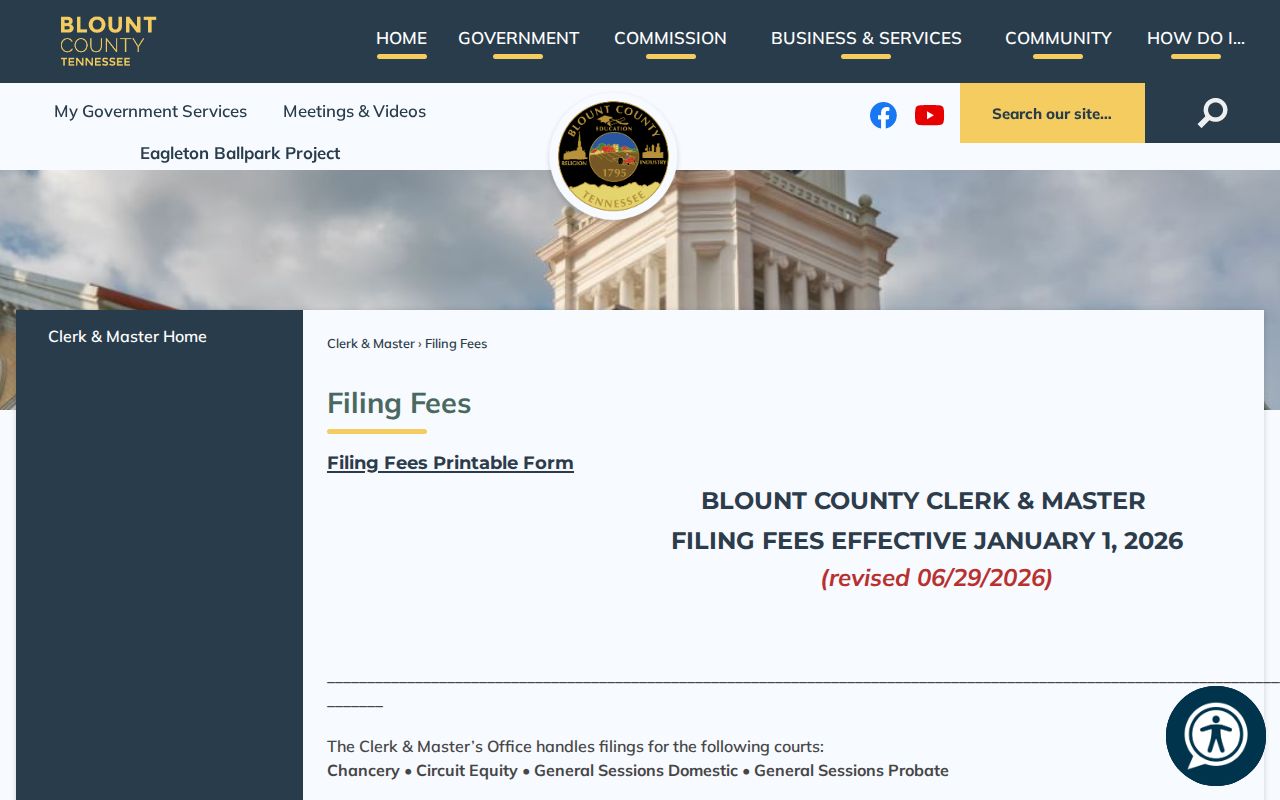
Check the schedule for the exact Chancery or probate transaction, since filing fees are due when filed.
| Item | Published amount |
|---|---|
| Plain copy | $0.50 per page |
| Certified copy | $5 plus $0.50 per page |
| Exemplified copy | $10 plus $0.50 per page |
| Existing-case motion or petition | Generally $25 |
Fiscal year 2025 statistics reported 386 Blount Circuit Civil filings. Dispositions came to 347. Those counts leave out General Sessions and Chancery. Treat them as court workload measures, not a live tally of open cases. The Sixth Circuit source covers the federal appellate layer, not the county civil search.
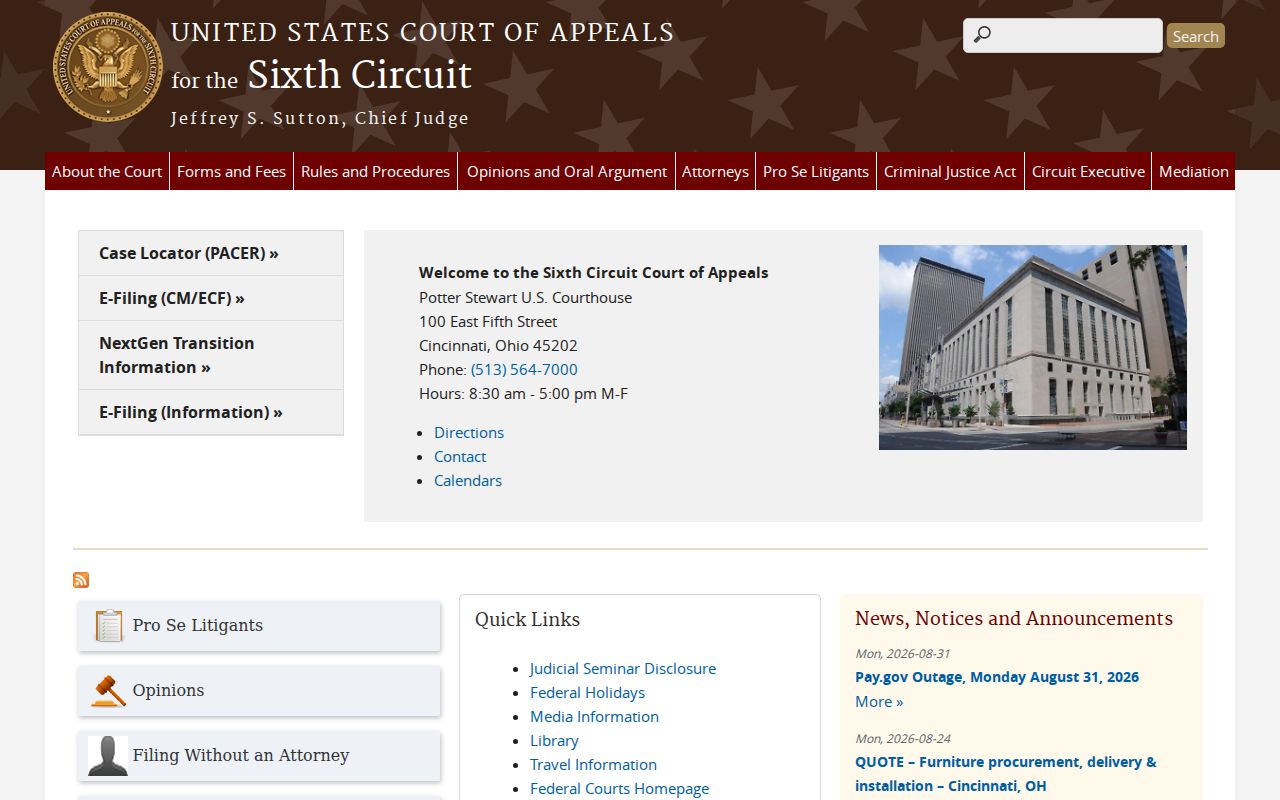
A federal appeal travels its own docket. Do not confuse that path with Blount County's trial-court register of civil cases.